Why Colleges Are Moving Away from the Term "Dorm"
Walk across almost any college campus and you'll hear students talk about "the dorms." Yet many colleges and universities have intentionally moved away from using the term themselves.
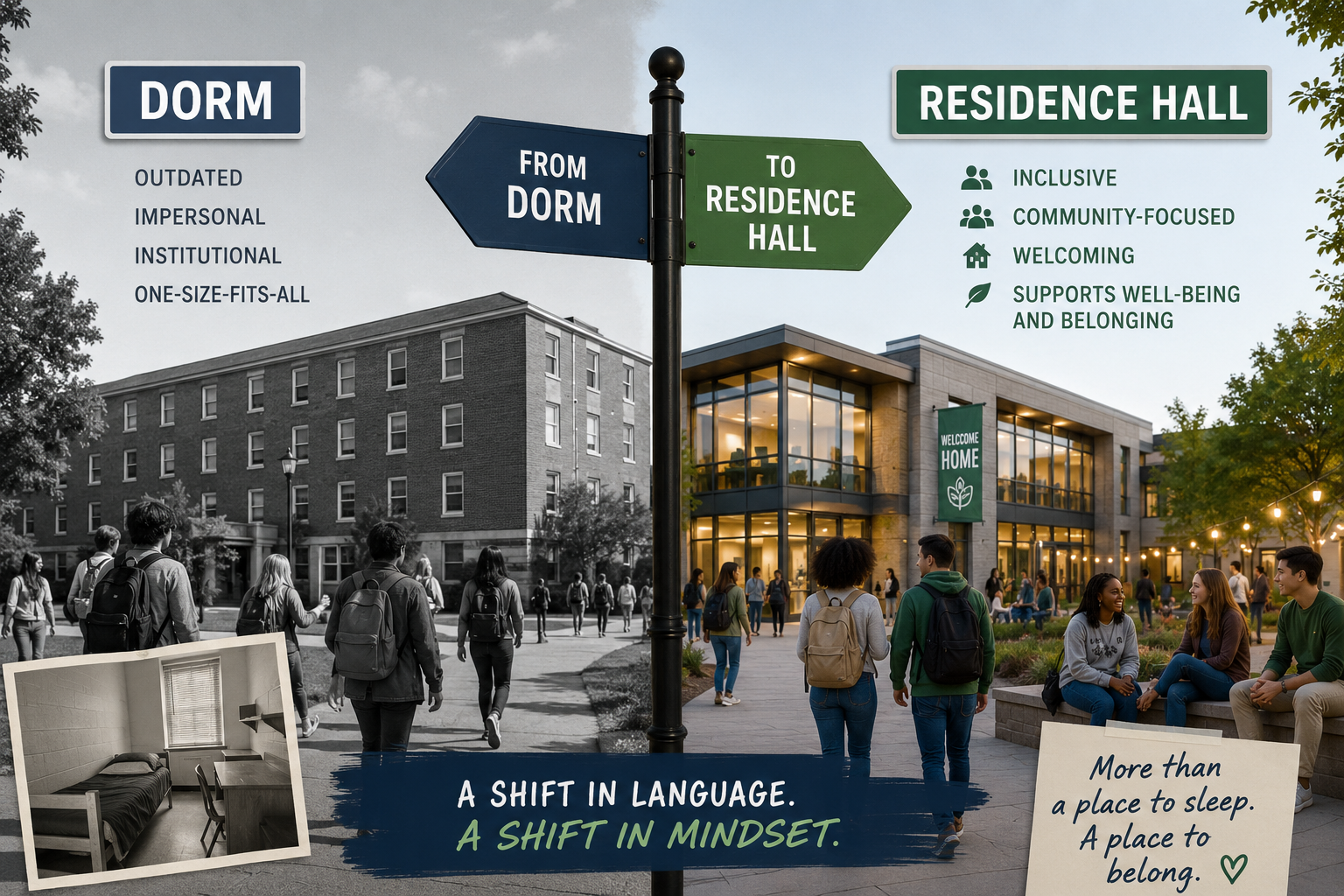
Instead, institutions increasingly refer to their facilities as residence halls, residential communities, or student housing. This change reflects a larger shift in how higher education views the role of residential life.
More than just a Space to Sleep
The word "dorm" comes from the Latin word dormitorium, meaning a place for sleeping. While technically accurate, it no longer captures what today's residential experience is designed to provide.
Modern residence halls are places where students build friendships, develop independence, learn leadership skills, and create a sense of belonging. For many students, some of the most important learning happens outside the classroom.
As a result, colleges are choosing language that better reflects the educational and developmental value of living on campus.
Residential Life is Part of Student Success
Research continues to show that students who live on campus are often more engaged and more likely to persist through graduation.
Because of this, housing is increasingly viewed as a strategic contributor to retention, wellbeing, and student success—not simply an operational service.
The term "residence hall" reinforces the idea that these spaces are intentional communities that support student growth.
Students Expect More
Today's students expect housing to offer more than a bed and a desk. They look for community, wellness resources, sustainability initiatives, leadership opportunities, and spaces that support both academic and personal success.
Many institutions now offer living-learning communities, themed housing, and wellness-focused residential programs that go far beyond the traditional concept of a dormitory.
Language Reflects Mission
Most students will probably continue to say they're "going back to the dorm," and that's unlikely to change anytime soon.
But for institutions, the shift in language is meaningful. It reflects a growing recognition that residential life plays a critical role in the student experience.
The future of student housing is not simply about where students sleep. It's about creating communities where students can connect, grow, and thrive.